
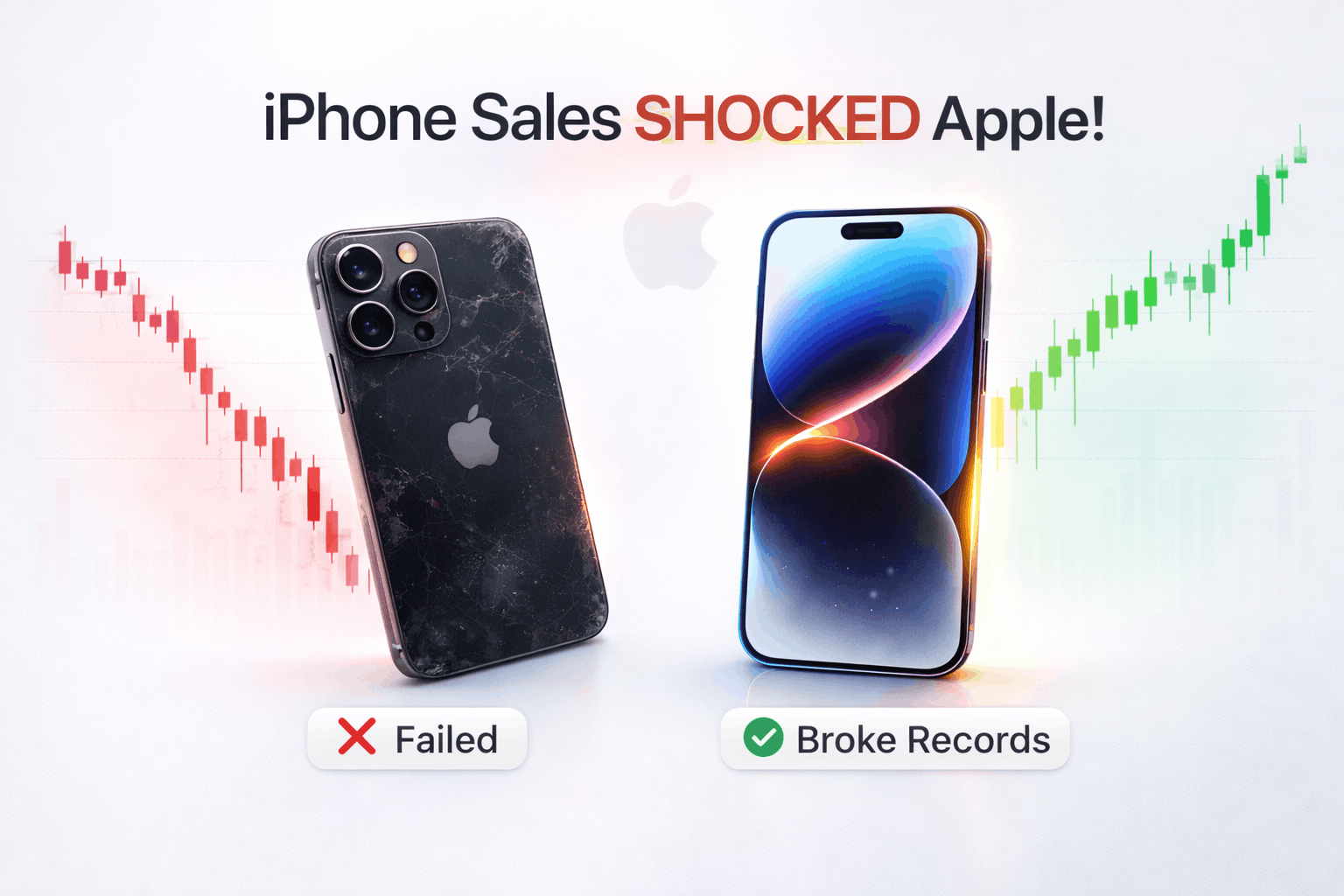

iPhone 16 vs iPhone 17: Which One Sold More & Which One Flopped? (Real Data)
Meta Description: Real sales signals for iPhone 16 vs iPhone 17: early launch performance, best-selling rankings, and market share data to see which sold more in 2025–2026.
“Which iPhone sold more?” sounds like a simple question, but the truth depends on one important detail: are we talking about launch-week demand or overall sales performance over time?
With iPhone 16 and iPhone 17, the data shows an interesting story. The iPhone 17 lineup had a stronger early start in key markets, while the iPhone 16 proved it had serious staying power—showing up as a best-seller well into 2025.
Image suggestion: A side-by-side comparison image of iPhone 16 and iPhone 17 silhouettes with a sales chart line behind them (Alt text: iPhone 16 vs iPhone 17 sales comparison with real data)
What Counts as “Sold More” and What Counts as a “Flop”?
Before judging anything, we need a fair definition.
- “Sold more” (launch phase): Higher sell-through in the first days/weeks after release.
- “Sold more” (lifecycle): Strong demand across multiple quarters, not just launch hype.
- “Flop” (realistic meaning): A model that underperforms expectations or sells noticeably weaker than its predecessor or sister models. A lineup can succeed overall even if one variant is “soft.”
Now let’s look at what the real reports say.
Launch Battle: iPhone 17 Had the Stronger Start (Early Sales Data)
According to Counterpoint Research data reported via Reuters, the iPhone 17 series outsold the iPhone 16 series by 14% during the first 10 days of availability in two major markets: China and the United States.
Here are the standout launch signals from that same analysis:
- The base iPhone 17 nearly doubled its sales in China compared to the base iPhone 16 during the same early window.
- The base iPhone 17’s sales rose by 31% across China and the US combined compared to the base iPhone 16’s early performance.
- Counterpoint analysts attributed the stronger early demand to practical upgrades offered at similar pricing—like a better chip, display improvements, increased base storage, and a stronger selfie camera.
Bottom line (launch phase): If we judge only the first 10 days in key markets, iPhone 17 won the early sales race.
Image suggestion: A simple bar chart graphic showing “First 10 Days: iPhone 17 +14% vs iPhone 16” (Alt text: iPhone 17 outsold iPhone 16 by 14 percent in first 10 days)
Lifecycle Battle: iPhone 16 Proved It Was a Best-Seller for Longer
Launch wins are great, but long-term sales strength often matters more. Here’s where iPhone 16 shows its real power.
Counterpoint Research’s handset model tracking ranked the iPhone 16 as the world’s best-selling smartphone in Q1 2025. That is a major signal of demand, because Q1 is far enough from launch that “hype-only” sales usually fade—yet iPhone 16 stayed on top.
Later, Counterpoint’s Top 10 report again put the iPhone 16 as the best-selling smartphone globally in Q3 2025, and outlets summarizing the report noted it led with about a 4% volume share for that quarter.
Bottom line (lifecycle): Even if iPhone 17 started stronger, iPhone 16 remained a global best-seller across multiple quarters.
So… Which One Sold More Overall?
Here’s the honest answer: we don’t have official Apple unit-by-unit totals publicly broken out by “iPhone 16 vs iPhone 17” in a single clean number. Apple typically reports revenue and broad iPhone performance, not model-by-model unit sales.
But we can still draw a reliable conclusion using the most credible signals available.
What the data strongly suggests
- Early sales winner: iPhone 17 (stronger first 10 days in China and the US).
- Long-term best-seller signal: iPhone 16 (best-selling smartphone globally in Q1 2025 and Q3 2025 per Counterpoint).
If your definition of “sold more” means who dominated the launch window, iPhone 17 wins. If it means who stayed on top for multiple quarters, iPhone 16 looks extremely strong.
Did Either iPhone “Flop”?
Using real market signals, it’s hard to call either iPhone 16 or iPhone 17 a true flop.
Why iPhone 17 doesn’t look like a flop
In addition to the stronger early sales, Counterpoint’s broader market reporting (also carried by Reuters) said Apple led the global smartphone market in 2025 with a 20% share, supported by strong demand for the iPhone 17 series and growth in emerging and mid-sized markets.
Also, in China—one of Apple’s most competitive regions—Reuters reporting based on Counterpoint data said Apple hit about 25% share of China’s smartphone market in October 2025, with iPhone 17 variants showing mid-to-high double-digit growth.
Those are not “flop” indicators.
Where the “flop” idea comes from (and what data supports)
Sometimes people call a phone a flop because it feels less exciting online, or because upgrades look incremental. But that’s not the same as weak sales.
What the data does show is that some launches can have mixed momentum. For example, Counterpoint’s US analysis around iPhone 16’s launch noted that initial sales trailed slightly year-over-year in the early phase. That does not mean iPhone 16 failed—it later ranked as a global best-seller in multiple quarters—but it helps explain why some people felt the launch buzz was softer.
In short: “soft launch” is not the same as “flop.” A phone can start slower and still become a long-term best-seller.
Quick Verdict: iPhone 16 vs iPhone 17 (Real-Data Summary)
- Which sold more early? iPhone 17 (about +14% vs iPhone 16 in the first 10 days in China and the US).
- Which proved long-term demand? iPhone 16 (ranked best-selling smartphone globally in Q1 2025 and Q3 2025 by Counterpoint tracking).
- Which one flopped? Neither has strong evidence of being a true flop based on reputable market tracking. The “flop” label is mostly hype unless tied to measurable underperformance.
Image suggestion: A clean infographic showing “Launch Winner: iPhone 17” and “Long-Term Winner: iPhone 16” (Alt text: iPhone 17 vs iPhone 16 launch and long-term sales performance summary)
Conclusion
If you want the most accurate, real-data takeaway: iPhone 17 looked stronger at launch, while iPhone 16 proved it had serious long-term demand by topping best-seller lists well into 2025. Calling either one a “flop” doesn’t match the strongest market signals we have.
Call to action: Want me to expand this into a deeper comparison with a “buyer guide” section (who should buy iPhone 16 vs iPhone 17 in 2026) while keeping it